
Definition
What they are
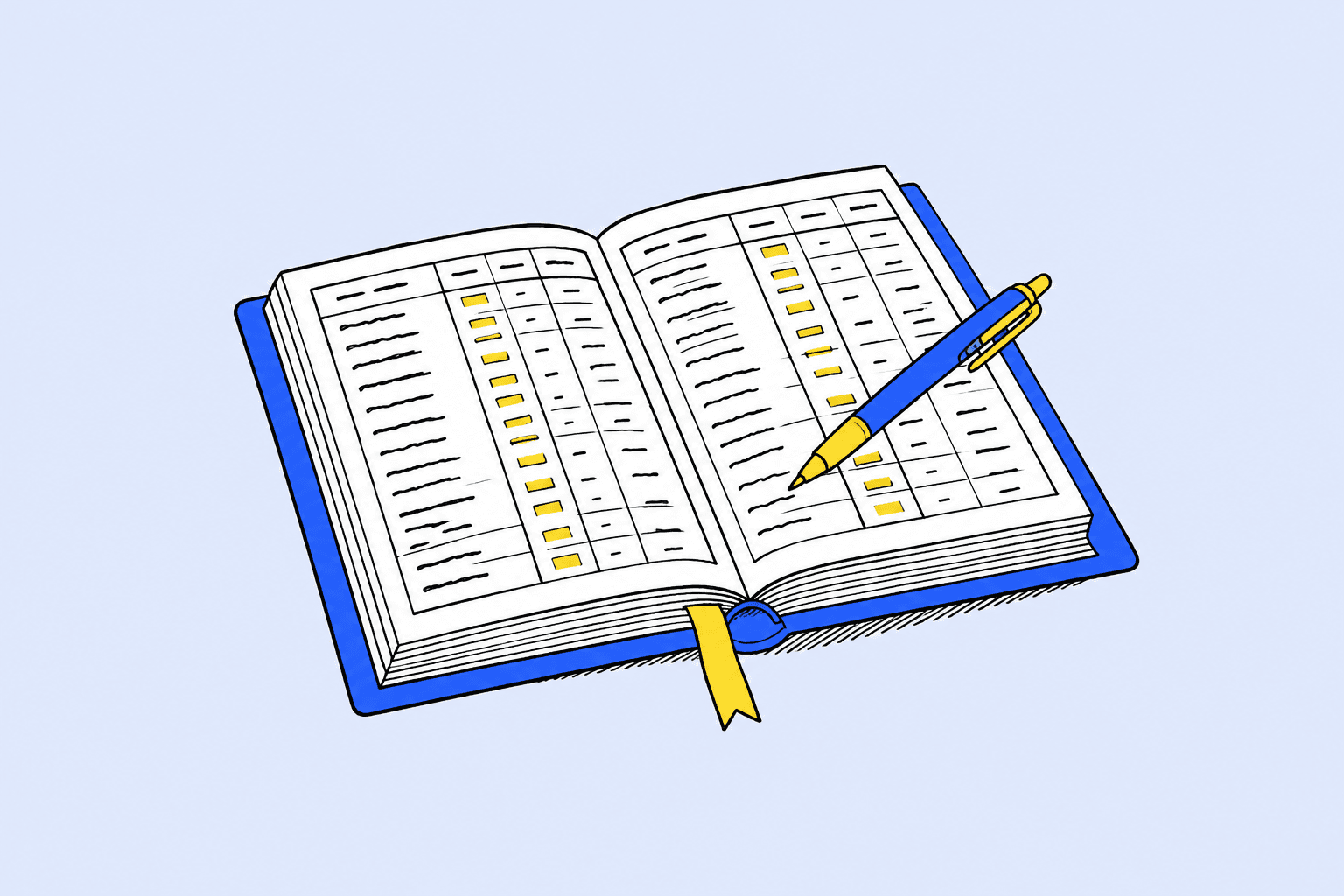
Books of accounts are your records of money in and money out. They must let the tax officer calculate your income. Section 62 of the Income-tax Act, 2025 (Section 44AA of the 1961 Act) says who must keep them.
Who must keep them
An individual or Hindu undivided family (HUF) must keep books if business income is more than ₹2,50,000 or turnover is more than ₹25 lakh. The test uses any of the 3 years before the tax year. A new business must keep books if it is likely to cross these limits. You must also keep books if you declare less profit than the presumptive scheme, which uses a fixed share of turnover.
What it means for you
Keep your books for 7 tax years from the end of the tax year. Rule 46 of the Income-tax Rules, 2026 sets this period.
Example
Sana is an individual who trades F&O as a business. Her turnover was ₹40 lakh in one of the 3 years before the tax year. That is more than ₹25 lakh, so she must keep books. A loss in that year does not change this.
Etymology
Origin
Timeline
1976
Section 44AA of the Income-tax Act, 1961 asks some professions and businesses to keep books.
2026
The Income-tax Act, 2025 moves the rule to Section 62, and Rule 46 sets the details.
Articles with this term


General information, not tax advice. Rules change, so check with a CA before you act.