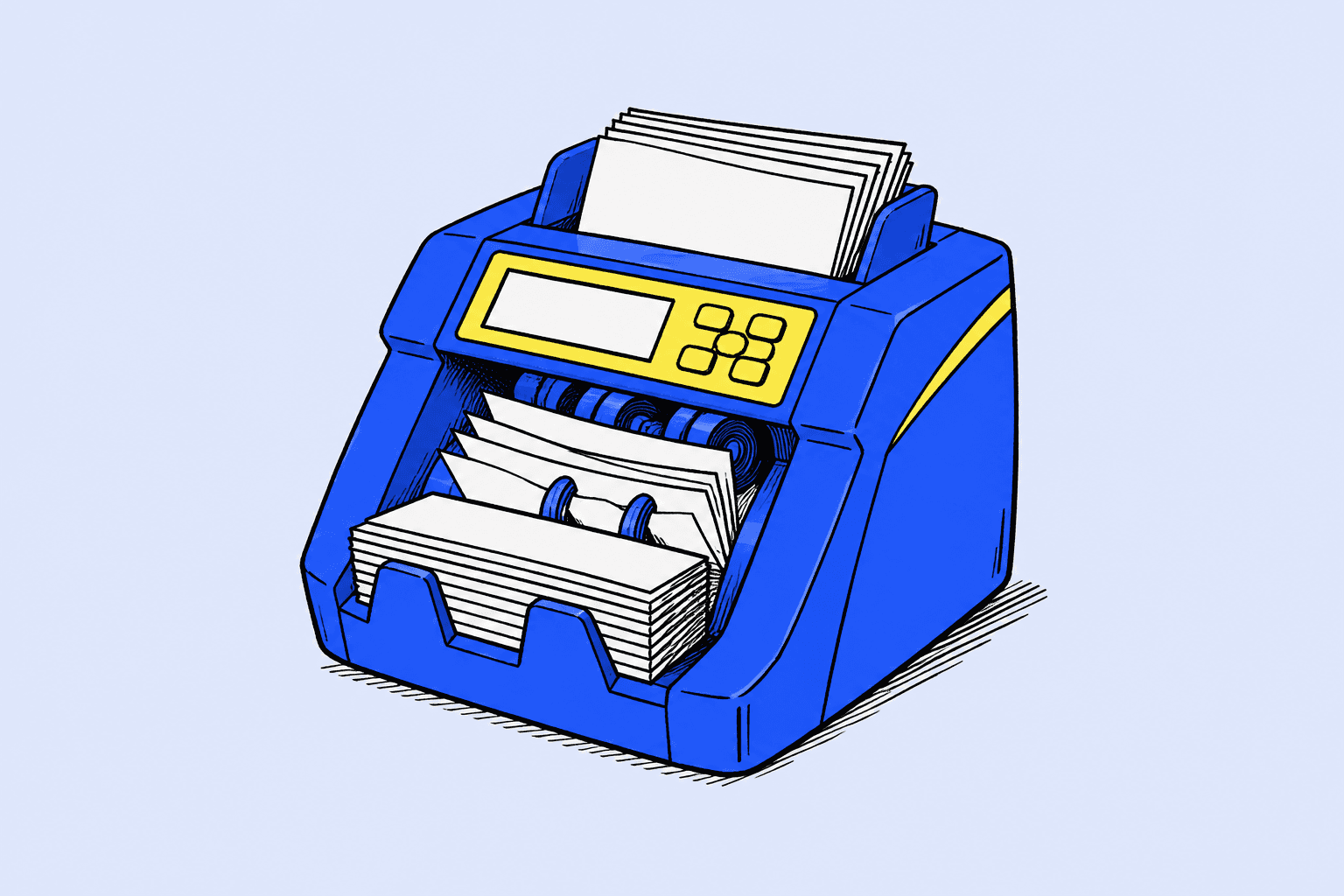
A counting machine counts every note that passes through it. F&O turnover works the same way. Every profit and every loss is counted in, and none of them cancels another out.
TL;DR
What F&O turnover means
Turnover is the figure that the tax law compares with a limit. The limit decides if you must keep books, get a tax audit or can use the presumptive scheme. These limits apply when you trade F&O as a business.
The Income-tax Act, 2025 does not say how to count turnover for futures and options (F&O). Tax auditors follow the Guidance Note on Tax Audit from the Institute of Chartered Accountants of India (ICAI).
ICAI wrote its latest edition, Revised 2026, for Section 44AB of the 1961 Act. ICAI says it will issue guidance for Section 63 of the 2025 Act later. The F&O method below comes from this edition.
Your contract note shows the full value of each contract. That value is not your turnover. Only the difference between your buy price and your sell price counts.
Did you know?
How to count F&O turnover
F&O turnover is not the value of the contracts. It is the total of your favourable differences (profits on closed trades) and unfavourable differences (losses on closed trades).
Count the trades that you close in the tax year. The Guidance Note gives these rules:
Differences: Add the profit on every closed trade. Add the loss on every closed trade as a positive number.
Option premium: Count the premium you receive when you sell an option. If your trade result already includes that premium, do not add it again.
Reverse trades: Count the difference on every reverse trade. A reverse trade is the opposite trade that closes an earlier trade.
Open positions: Count a position in the tax year when you close it, not the year when you open it.
Delivery: If a contract settles by delivery, count the difference between the trade price and the settlement price.
If you deliver shares that you hold as stock-in-trade, count their full sale value as well. Count intraday share trades in the same way, because they also settle by difference.
A worked example
Example
Arjun's F&O turnover for Tax Year 2026-27
Arjun trades Nifty and Bank Nifty futures and options. He closes every trade by 31st Mar 2027.
Profit on futures trades with a profit: ₹1,20,00,000
Loss on futures trades with a loss: ₹1,05,00,000
Profit on option trades with a profit: ₹2,30,00,000
Loss on option trades with a loss: ₹2,60,00,000
Premium on options he sold that expired worthless: ₹40,00,000
Turnover: ₹1,20,00,000 + ₹1,05,00,000 + ₹2,30,00,000 + ₹2,60,00,000 + ₹40,00,000 = ₹7,55,00,000
Arjun's net profit is only ₹25,00,000 (₹1.20 crore − ₹1.05 crore + ₹2.30 crore − ₹2.60 crore + ₹0.40 crore). His turnover is ₹7.55 crore. He counts the ₹40,00,000 premium once, because it is also his profit on those options.
Now see how a sold option that ends in a loss works.
Example
Kabir sells one Nifty call option
Premium Kabir receives when he sells the call: ₹30,000
Price Kabir pays to buy the call back: ₹50,000
Loss on the trade: ₹50,000 − ₹30,000 = ₹20,000
The buy-back is the reverse trade. Its difference is the ₹20,000 loss, and that loss already includes the premium. Kabir counts ₹20,000 as turnover for this trade. He does not add the ₹30,000 premium again.
Why turnover matters
Three limits use your turnover. They are Section 62 of the 2025 Act (Section 44AA of the 1961 Act), Section 63 (Section 44AB) and Section 58 (Section 44AD). This table shows them for Tax Year 2026-27, which runs from 1st Apr 2026 to 31st Mar 2027.
What the limit decides | Limit | 2025 Act section |
|---|---|---|
You must keep books of accounts | Turnover more than ₹25 lakh, or income more than ₹2,50,000, in any of the 3 years before the tax year (individual or Hindu undivided family, HUF) | 62 |
You need a tax audit | Turnover more than ₹10 crore, or more than ₹1 crore if cash receipts or payments are more than 5% | 63 |
You can use the presumptive scheme | Turnover up to ₹2 crore, or up to ₹3 crore if cash receipts are 5% or less | 58 |
Arjun’s turnover of ₹7.55 crore is below the audit limit of ₹10 crore. It is above the limit for the presumptive scheme, so he cannot use that scheme. If his turnover was this high in earlier years too, he must keep books.
The Guidance Note says its method is only for the tax audit limit. It does not change how your income is taxed. For the other two limits, ask your chartered accountant (CA) which count to use.
Remember
What to check in your records
Add the turnover of all your trading businesses together, because the limits use the total. Include every broker and every segment, such as futures, options and intraday shares.
Download your broker's tax profit and loss (P&L) report for the full tax year. Most brokers list the profit or loss on each closed trade there, and you need that data.
Quick tip
Compare your total with the three limits in the table. If your turnover is near a limit, ask a CA to confirm the figure before the due date.
Key takeaways
F&O turnover is the total of your profits and losses on closed trades, with every loss counted as a positive number.
Count the premium on an option you sell once, and count the difference on every reverse trade.
Your turnover decides if you need books, a tax audit, or can use the presumptive scheme.
General information, not tax advice. Rules change, so check with a CA before you act.