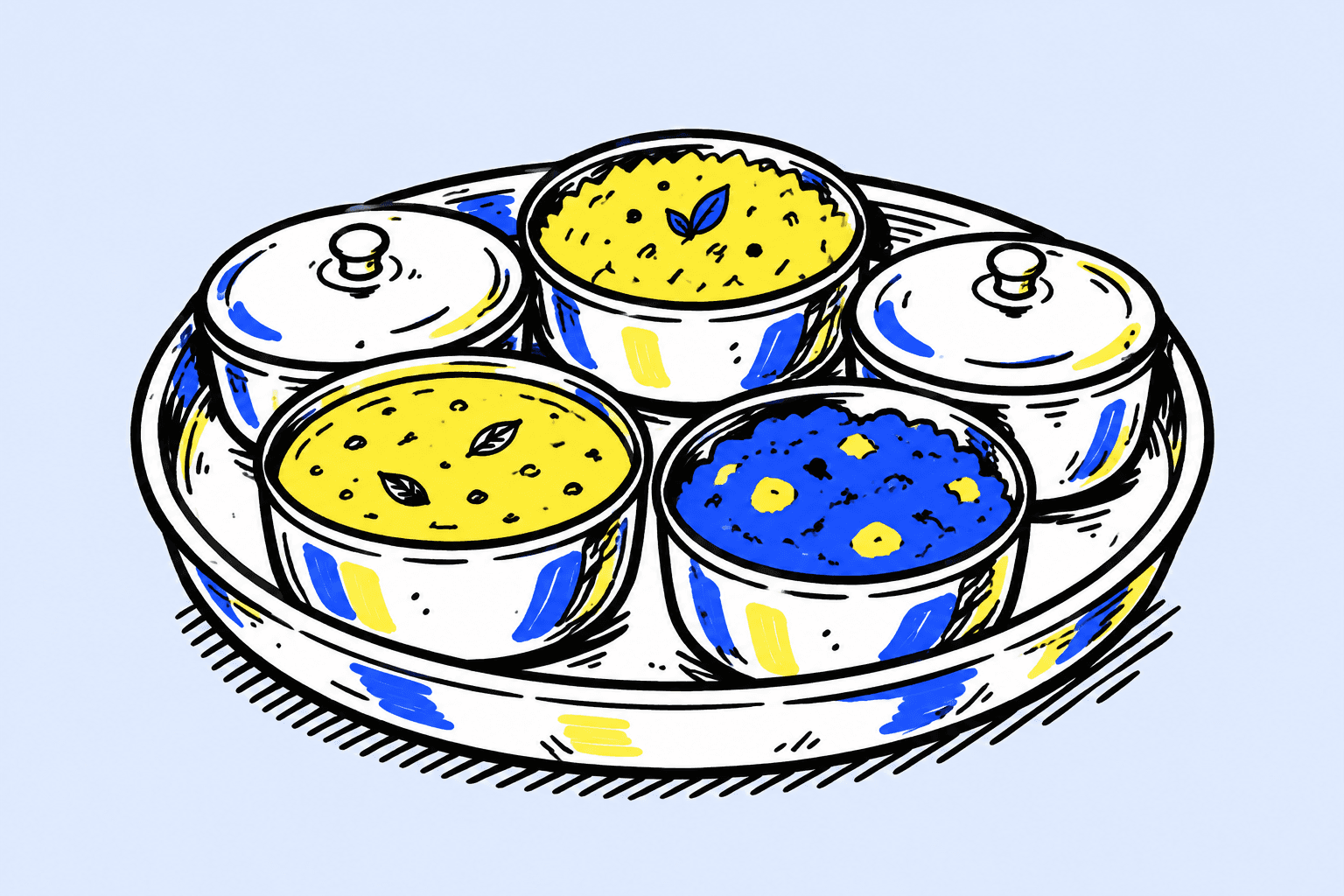
A salary is served like a thali, in many small bowls. Some come to you open and whole. Others have a lid on, and the taxman lifts it first.
TL;DR
What an allowance is
An allowance is a fixed amount your employer pays on top of basic salary for a particular purpose: rent, travel, your children's schooling. It's part of your salary, so it's taxed unless the law says otherwise.
Each exemption has its own limit, and many have conditions. The figures here are for Tax Year 2026-27 (1st Apr 2026 to 31st Mar 2027), under the Income-tax Act, 2025 and the Income-tax Rules, 2026.
Allowances tax-free in both regimes
These survive in the new regime because they repay money you spend doing your job:
Conveyance allowance for travel on official work, to the extent you actually spend it.
Travel or transfer allowance for a tour or a move to a new posting, including packing and moving costs.
Daily allowance for ordinary daily expenses while you're away from your usual place of work.
Transport allowance for employees who are blind, deaf and mute, or have a disability of the legs: up to ₹15,000 a month in metro cities and ₹8,000 a month elsewhere, plus dearness allowance on it.
For the first three, there's no fixed limit. The exemption is the amount you spent on duty, so keep the bills.
The standard deduction isn't an allowance, but every salaried person gets it: ₹75,000 in the new regime and ₹50,000 in the old regime.
Remember
Allowances tax-free only in the old regime
Allowance | Tax-free limit |
|---|---|
House rent allowance (HRA) | The least of three amounts, based on rent paid and salary |
Leave travel allowance (LTA) | Travel fare for two journeys in a block of four years |
Children's education allowance | ₹3,000 a month per child, for up to two children |
Hostel allowance | ₹9,000 a month per child, for up to two children |
Special allowances for hilly, border, remote or tribal areas | Fixed monthly amounts that depend on the place |
Uniform allowance | What you spend on a uniform you must wear on duty |
The children's allowance limits were raised from ₹100 and ₹300 a month when the new rules took effect on 1st Apr 2026.
Example
Kabir has two school-going children
Children's education allowance in his salary: ₹6,000 a month, or ₹72,000 a year
Tax-free limit: ₹3,000 × 2 children × 12 months = ₹72,000
Taxable part in the old regime: nil
In the new regime the whole ₹72,000 is taxed. In the old regime, none of it is.
Benefits that look like allowances
Some tax-free items aren't allowances at all. They're benefits your employer gives in kind, and separate valuation rules decide whether they're taxed:
Meals during working hours, or meal vouchers: not taxed up to ₹200 a meal in the old regime.
Gifts or vouchers from your employer: not taxed if they add up to less than ₹15,000 in the year.
Phone and internet bills your employer pays for work use.
Your employer's contribution to your provident fund, up to 12% of salary.
Allowances that are taxed in full
If no exemption covers an allowance, it's taxed like basic salary, whichever regime you pick. The common ones are special allowance, dearness allowance, overtime, city compensatory allowance and any bonus.
An allowance you receive but don't use for its purpose is taxable. If you get HRA and don't pay rent, or LTA and don't travel, the full amount is added to your income.
Watch out
How to claim these exemptions
Tell your employer at the start of the year which regime you want.
In the old regime, declare your rent, travel and other claims on Form 124, and give proof when asked, usually by January.
Check Part B of your Form 130 (the TDS certificate that replaced Form 16) after the year ends. It lists each exemption your employer allowed.
If something was missed, you can still claim most of it in your return.
Key takeaways
In the new regime, only allowances tied to official duty stay tax-free.
HRA, leave travel and children's education allowances are exempt only in the old regime.
An allowance with no exemption, such as special allowance, is taxed in full in both regimes.
General information, not tax advice. Rules change, so check with a CA before you act.